By Angel | Degusa Bags Team
Published: May 21, 2026
Updated: May 21, 2026
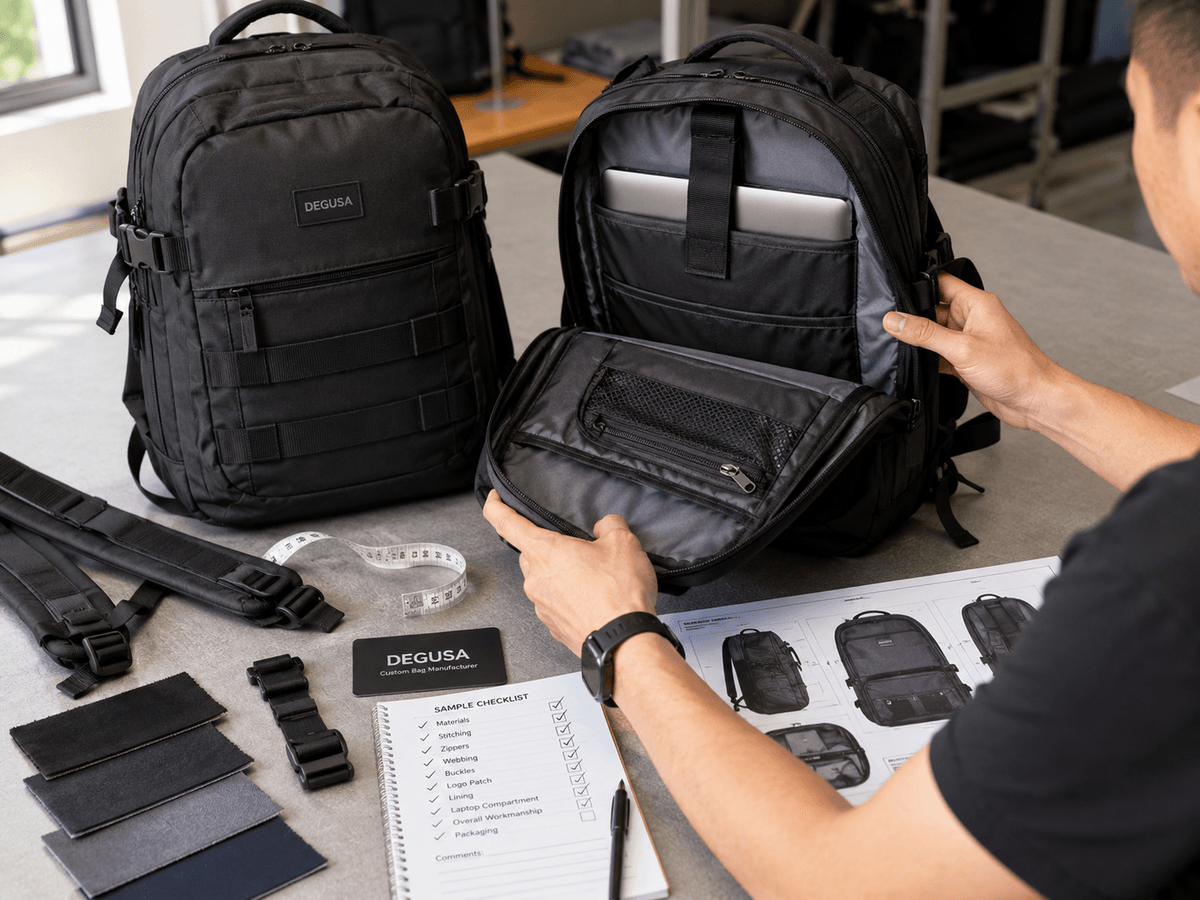
Backpacks are one of the most common custom bag products, but they are not always simple to develop. A backpack may include different fabrics, lining, padding, shoulder straps, zippers, inner pockets, laptop compartments, buckles, webbing, logo details, reinforcement and packing requirements.
For overseas buyers, choosing a custom backpack manufacturer in China should not only be about price. A reliable supplier should understand how the backpack will be used, what weight it needs to carry, which materials are suitable, how the logo should be applied, and how quality should be followed before shipment.
If important details are not checked before bulk production, buyers may face problems such as weak straps, poor zipper function, incorrect laptop compartment size, uneven stitching, wrong logo position, weak lining, poor shape or packing issues.
This guide explains what buyers should check when sourcing custom backpacks from China.
Quick Answer: What Should Buyers Check When Choosing a Custom Backpack Manufacturer?
When choosing a custom backpack manufacturer in China, buyers should check product experience, fabric and lining quality, shoulder strap construction, zipper function, laptop compartment size, inner pocket layout, logo position, stitching strength, load capacity, sample development, quality control process, packing method and export support.
A good backpack supplier should not only make the bag shape. They should help buyers confirm whether the backpack is practical, durable, comfortable to use and suitable for the target market before bulk production.
1. Start With the Backpack Type and Target Use
Before asking for a quotation or sample, buyers should first explain what kind of backpack they want to develop and how it will be used.
Different backpack types have different requirements. A school backpack is different from a laptop backpack. A sports backpack is different from a hiking backpack. A promotional backpack may focus on cost and logo visibility, while a retail backpack may need better structure, stronger materials and more detailed workmanship.
- Buyers should confirm:
- Daily backpack, school backpack, laptop backpack, sports backpack or travel backpack
- Target users
- Main carrying weight
- Indoor or outdoor use
- Retail, promotional or brand use
- Required pockets and compartments
- Expected price level
- Packing and shipping requirements
Clear target use helps the supplier choose more suitable materials, structure and workmanship.
If you are still comparing suppliers, you can also read our guide on How to Choose a Custom Bag Manufacturer in China before starting a backpack project.
2. Check Fabric and Lining Materials
Material is one of the most important points in backpack development. It affects appearance, cost, durability, weight, structure and user experience.
Common backpack materials include polyester, nylon, canvas, RPET fabric, Oxford fabric, coated fabric and water-resistant materials. Some backpacks may also use PU leather trims, mesh, foam padding or reinforced bottom materials.
Buyers should check whether the material fits the backpack’s target use. A lightweight promotional backpack may use a simpler fabric. A laptop backpack may need stronger fabric, protective padding and more stable structure. A travel backpack may need stronger zippers, reinforced webbing and better resistance to daily wear.
Material checking may include:
- Outer fabric type
- Fabric weight or thickness
- Lining material
- Water-resistant or waterproof treatment
- Bottom reinforcement
- Mesh material
- Padding and foam
- Fabric color and texture
- Material smell
- Color difference between sample and bulk material
If a buyer wants custom backpacks with specific materials or colors, these details should be confirmed during sampling before bulk production.
3. Review Shoulder Straps and Back Panel Comfort
Shoulder straps are one of the most important functional parts of a backpack. Even if the backpack looks good, weak or uncomfortable shoulder straps can create a poor user experience.
Buyers should check whether the shoulder straps are wide enough, padded enough and securely attached to the backpack body. For backpacks that carry laptops, books, sports gear or travel items, shoulder strap strength should be reviewed carefully.
Important points include:
- Strap width
- Padding thickness
- Webbing strength
- Stitching at stress points
- Adjustment buckle quality
- Strap length
- Comfort when carrying weight
- Back panel padding
- Breathable mesh if needed
The connection between the shoulder strap and backpack body is especially important. This area often carries pressure during use, so reinforcement and stitching strength should be checked during sample review and quality control.
4. Test Zippers, Pullers and Openings
Zippers are used every day on backpacks, so zipper quality should not be ignored. A poor zipper can quickly lead to customer complaints, even if the fabric and shape are acceptable.
Buyers should test whether the zipper opens and closes smoothly. They should also check zipper size, zipper tape strength, zipper direction, puller quality and zipper stitching.
For backpack projects, zipper checking may include:
- Main compartment zipper
- Front pocket zipper
- Side pocket zipper
- Hidden zipper
- Laptop compartment zipper
- Zipper puller shape
- Zipper puller logo
- Zipper end reinforcement
- Smooth opening and closing
If a backpack has a large opening, curved zipper or double puller design, the supplier should test whether the zipper runs smoothly after sewing. This should be checked on the sample before bulk production.
5. Check Inner Pockets and Laptop Compartment
Many custom backpacks include inner pockets, laptop compartments, tablet pockets, zipper pockets, mesh pockets, bottle pockets or organizer sections. These details affect how useful the backpack is.
If the backpack is designed for laptops, the laptop compartment should be checked carefully. Buyers should confirm the laptop size, padding thickness, pocket height, closure method and whether the compartment protects the device properly.
Useful points to check include:
- Laptop compartment size
- Padding around the laptop area
- Elastic band or Velcro closure
- Tablet pocket
- Inner zipper pocket
- Mesh organizer pocket
- Side bottle pocket
- Pen or accessory pocket
- Pocket position and depth
A laptop backpack should not only look professional. It should also hold the device securely and make daily use convenient.
6. Check Logo Position and Branding Details
Logo details are important for custom backpacks, especially for brand owners, schools, sports brands, promotional buyers and retailers.
Common logo methods for backpacks include silkscreen printing, embroidery, woven label, rubber patch, leather patch, metal logo, heat transfer and custom zipper puller logo.
Buyers should check:
- Logo position
- Logo size
- Logo color
- Printing clarity
- Embroidery shape
- Woven label alignment
- Rubber patch attachment
- Leather patch edge finishing
- Metal logo surface
- Logo visibility when the backpack is worn or packed
The logo should match the approved artwork and approved sample. If the logo is placed on a front pocket or curved area, buyers should make sure it does not look distorted after sewing.
7. Review Stitching and Reinforcement
Stitching quality affects both appearance and durability. Backpacks usually carry more weight than simple tote bags or drawstring bags, so stitching and reinforcement are very important.
Buyers should check stitching around shoulder straps, handles, zipper openings, pockets, side seams, bottom panels and stress points.
Stitching review may include:
- Straight stitching lines
- Even stitch length
- No skipped stitches
- No loose threads
- Clean binding
- Reinforced handle stitching
- Reinforced shoulder strap attachment
- Strong side seams
- Bottom panel reinforcement
- Bartack reinforcement where needed
A backpack may look fine at first glance, but weak stitching at stress points can create problems after use. This is why stitching should be checked carefully during sample approval and final inspection.
8. Consider Load Capacity and Real Use
A backpack is meant to carry items, so buyers should think about real use conditions. The supplier should understand whether the backpack will carry light promotional items, daily books, laptops, sports gear, travel items or heavier equipment.
Load capacity depends on fabric, lining, padding, stitching, webbing, buckles and structure. If the target use involves heavier loading, buyers should check whether the design needs reinforcement.
Buyers can review:
- Expected carrying weight
- Shoulder strap strength
- Handle strength
- Bottom support
- Back panel structure
- Buckle and slider strength
- Stress point reinforcement
- Whether the backpack keeps shape when loaded
For overseas buyers, it is better to discuss load expectations before sampling. This helps the supplier avoid choosing materials or structures that are too weak for the intended use.
9. Check Backpack Shape and Appearance
Backpack shape matters because it affects the final presentation. Some backpacks need a soft casual shape, while others need a more structured retail appearance.
Buyers should check whether the backpack keeps its intended shape after sewing, packing and filling. Padding, lining, seam direction and fabric stiffness can all affect the shape.
Appearance checking may include:
- Overall shape
- Symmetry
- Front panel flatness
- Pocket position
- Side panel shape
- Bottom shape
- Wrinkles or uneven areas
- Whether the sample matches the design
For retail backpacks, appearance consistency is especially important because the product may be displayed online, in stores or in promotional catalogs.
10. Confirm Packing and Carton Details
Packing is also part of backpack quality. A well-made backpack can still create problems if it is packed poorly, folded incorrectly or shipped with unclear carton marks.
Buyers should confirm whether the backpack will be packed flat, folded, stuffed with paper, placed in a polybag, or packed with hangtags and labels.
Packing details may include:
- Individual polybag
- Hangtag
- Product label
- Warning label if needed
- Quantity per carton
- Carton size
- Carton weight
- Carton marks
- Barcode label
- Pallet requirement if needed
For export orders, carton marks and packing quantity should be reviewed before shipment. This helps reduce warehouse receiving problems and shipping confusion.
11. Ask About Sample Development and Quality Follow-Up
Before bulk production, buyers should ask how the supplier handles sample development and quality follow-up. This is especially important for custom backpacks because many details need to be confirmed before mass production.
The sample should help confirm material, size, structure, logo, zipper, shoulder straps, inner pockets, laptop compartment, stitching and packing method.
During production, quality follow-up may include material checking, logo checking, in-line production review, final inspection and packing review.
If buyers cannot visit the factory in person, production photos, inspection photos and packing photos can help reduce uncertainty before shipment.
Custom Backpack Supplier Checklist
Before choosing a custom backpack manufacturer in China, buyers can use this simple checklist:
- Has the supplier made similar backpack styles before?
- Can the supplier suggest suitable materials?
- Are shoulder straps and back panel details reviewed?
- Are zippers and pullers tested?
- Is the laptop compartment size confirmed?
- Are inner pockets and organizer sections practical?
- Is the logo position and method confirmed?
- Are stitching and stress points reinforced?
- Is load capacity discussed?
- Is packing method confirmed?
- Does the supplier provide quality control follow-up?
- Can the supplier support export packing and shipment coordination?
This checklist helps buyers compare suppliers based on real backpack production details instead of only comparing price.
FAQ
What should buyers check when sourcing custom backpacks from China?
Buyers should check materials, lining, shoulder straps, zippers, laptop compartment, inner pockets, logo details, stitching, load capacity, packing method and the supplier’s quality control process.
Why are shoulder straps important for custom backpacks?
Shoulder straps affect comfort and durability. Buyers should check strap width, padding, webbing strength, adjustment buckles and reinforced stitching at stress points.
What materials are commonly used for custom backpacks?
Common backpack materials include polyester, nylon, canvas, Oxford fabric, RPET fabric, coated fabric, mesh, foam padding and water-resistant materials.
Should buyers approve a backpack sample before bulk production?
Yes. A backpack sample helps confirm material, size, logo, zipper, shoulder straps, inner pockets, laptop compartment, stitching and packing details before bulk production.
How can buyers check backpack quality before shipment?
Buyers can ask for production photos, inspection photos, packing photos and final inspection updates. They can also use third-party inspection if needed.
How do I choose a reliable custom backpack manufacturer in China?
Choose a supplier with similar product experience, clear sample development process, quality control follow-up, good communication, realistic MOQ explanation and export support.
Conclusion
Choosing a custom backpack manufacturer in China requires more than checking price. Buyers should review materials, shoulder straps, zippers, inner pockets, laptop compartments, logo details, stitching, load capacity, packing and quality control process.
A reliable supplier should help buyers confirm whether the backpack is practical, durable and suitable for the target market before bulk production.
Degusa Bags supports custom backpack development, sample follow-up, material and logo checking, quality control, packing review and export coordination for overseas buyers.
If you are planning a new backpack project, you can contact us to discuss your requirements and get practical suggestions before sampling or bulk production.
Author Note
This article was prepared by Angel from Degusa Bags Team, based on our daily work in custom backpack development, sample checking, material review, logo confirmation, quality follow-up, packing review and export communication for overseas buyers.
Degusa Bags supports OEM and ODM custom bag projects, including backpacks, cooler bags, sports bags, duffel bags, pet travel bags, racket bags, cosmetic bags and other functional sewn products.