By Angel | Degusa Bags Team
Published: May 17, 2026
Updated: May 17, 2026
When overseas buyers look for a custom bag manufacturer, they often see two common terms: OEM and ODM. These two models are widely used in custom bag manufacturing, but they are not the same.
OEM usually means the buyer already has a clear design, sample, tech pack, logo artwork or product specification, and needs the supplier to produce the bags according to those requirements. ODM usually means the buyer has an idea, target use, reference style or product direction, but still needs the supplier to help develop the design, structure, materials and sample.
Understanding the difference between OEM and ODM can help buyers communicate more clearly with suppliers, prepare the right information, control sample development, and reduce misunderstandings before bulk production.
At Degusa Bags, OEM and ODM support is part of our custom bag development work. Different buyers may need different levels of support, depending on whether they already have a complete design or are still turning an idea into a workable bag sample.
Quick Answer: What Is the Difference Between OEM and ODM Bags?
OEM bags are produced based on the buyer’s existing design, sample, tech pack or detailed specification. The buyer usually controls the design direction, logo, materials, size, structure and packing requirements.
ODM bags are developed with more supplier support. The buyer may only have a product idea, target use, reference photo, market need or rough direction. The supplier helps review the design, suggest materials, adjust structure, prepare samples and make the idea more practical for production.
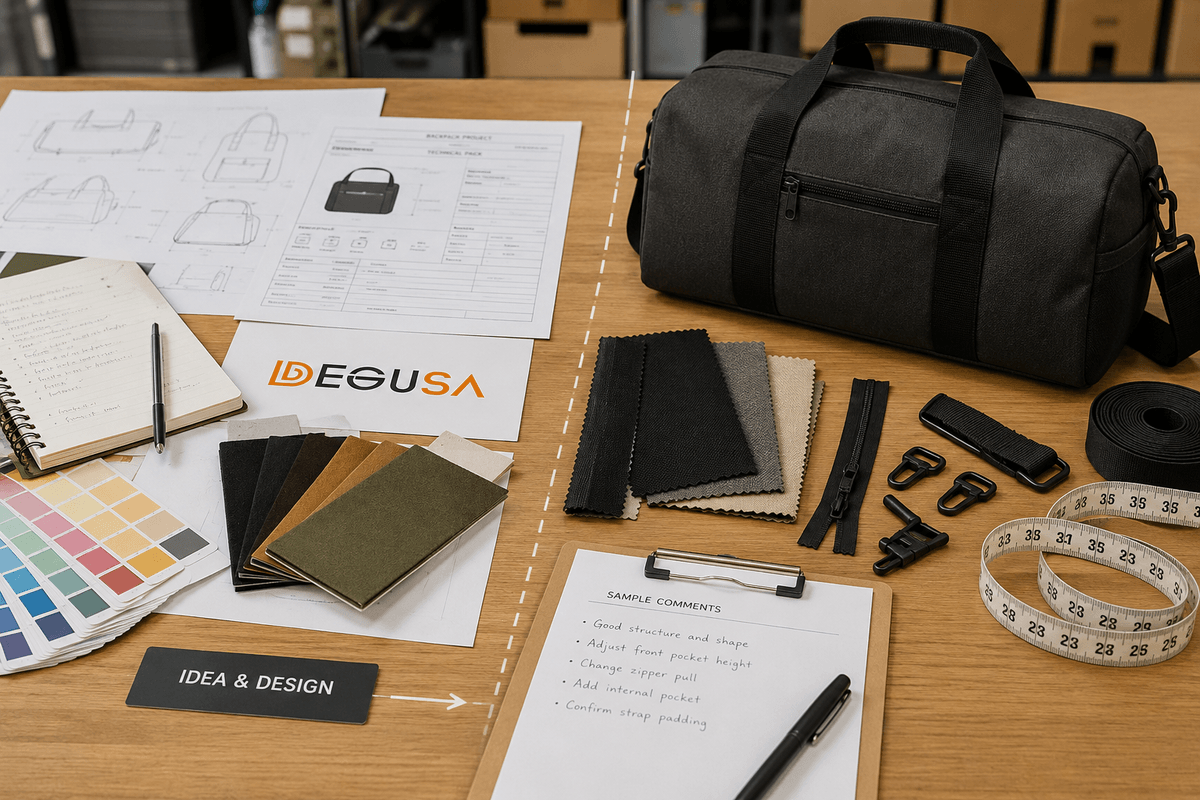
1. What Does OEM Mean in Custom Bag Manufacturing?
OEM stands for Original Equipment Manufacturing. In custom bag production, OEM usually means the buyer provides the main design requirements, and the supplier produces the bags according to those requirements.
OEM is suitable when the buyer already knows what they want to make. For example, the buyer may have a physical sample, a detailed tech pack, a CAD drawing, a reference bag with changes, confirmed material requirements, logo artwork and packing instructions.
In an OEM project, the supplier’s role is mainly to help make the product correctly and consistently. The supplier may still provide suggestions on materials, workmanship, sampling, quality control and packing, but the product direction is usually controlled by the buyer.
OEM bag projects are common for established brands, sports brands, promotional product companies, retailers and importers who already have their own product design or customer-approved style.
2. What Information Should Buyers Prepare for OEM Bags?
OEM works best when the buyer provides clear and complete information. The more complete the information is, the easier it is for the supplier to quote, sample and prepare bulk production.
For an OEM custom bag project, buyers should prepare:
- Bag type and target use
- Size and structure details
- Tech pack or design drawing
- Physical sample or reference photos
- Fabric and lining requirements
- Logo artwork and logo method
- Color reference or Pantone number
- Zipper, puller, webbing and hardware details
- Packing requirements
- Estimated order quantity
- Target delivery schedule
If some information is missing, the supplier may need to ask more questions before quotation or sampling. This is normal because a custom bag includes many details, and unclear information can create problems later.
For OEM projects, the approved sample is very important. It becomes the reference for bulk production and quality checking.
3. What Does ODM Mean in Custom Bag Development?
ODM stands for Original Design Manufacturing. In custom bag manufacturing, ODM means the supplier provides more development support before production starts.
ODM is suitable when the buyer has an idea but does not yet have a complete design. The buyer may know the target market, bag function, product use, rough style, size range, logo direction or expected price level, but still needs help turning that idea into a real sample.
For example, a buyer may say they want a cooler bag for outdoor events, a pet travel bag for small dogs, a sports bag for team use, a racket bag for table tennis products, or a promotional backpack for a campaign. They may have reference photos, but not a complete tech pack.
In this situation, the supplier can help review the idea, suggest materials, adjust structure, choose practical accessories and prepare a workable sample.
ODM does not mean the supplier makes all decisions alone. It is still a collaborative process. The buyer gives the direction, and the supplier helps make that direction practical for production.
4. When Should Buyers Choose ODM?
ODM is helpful when buyers need support before a design is finalized. It is especially useful for new product projects, small and medium brands, promotional buyers, startups or buyers who are testing a new bag category.
Buyers may choose ODM when:
- They only have an idea or reference photo
- They do not have a complete tech pack
- They need material suggestions
- They need help adjusting bag structure
- They want to create a new version based on an existing style
- They are not sure which logo method is suitable
- They need advice on MOQ, cost and production feasibility
- They want to test a product before developing a full collection
ODM can save time in the early stage because the supplier helps connect the idea with real production details. However, buyers still need to provide enough information about target use, customer group, size, budget, quantity and function.
5. OEM vs ODM: Main Differences for Overseas Buyers
The main difference between OEM and ODM is the level of design and development support needed from the supplier.
In OEM, the buyer usually brings the design. The supplier follows the confirmed specification and makes the product. In ODM, the buyer brings the idea or direction. The supplier helps develop the product and turn the idea into a workable sample.
A simple way to understand the difference is:
- OEM: “Here is our design. Please help produce it.”
- ODM: “Here is our idea. Please help develop it into a product.”
Both models can be used for custom bags. The right choice depends on how much product information the buyer already has.
If the buyer has complete drawings, material details and logo artwork, OEM may be more efficient. If the buyer only has a rough concept, ODM may be more practical.
6. Sampling Is Important for Both OEM and ODM
Whether the project is OEM or ODM, sample development is still an important step before bulk production.
For OEM bags, the sample helps confirm whether the supplier understands the buyer’s design correctly. It checks material, size, logo position, zipper direction, stitching, hardware, lining, workmanship and packing details.
For ODM bags, the sample is even more important because the product may still be developing. The first sample may need comments and adjustments before it becomes the approved sample for bulk production.
This is why buyers should not treat sampling as a delay. Sampling helps both sides confirm details before materials are cut, logos are printed and mass production begins.
A clear sample development process can reduce mistakes and make bulk production more reliable.
7. Material and Logo Decisions May Be Different in OEM and ODM
In OEM projects, materials and logo methods are often already confirmed by the buyer. The supplier checks whether those materials and logo methods are available, practical and suitable for production.
In ODM projects, the supplier may need to suggest material options based on the bag’s function, target price and intended use.
For example, a cooler bag may need insulated lining and waterproof outer fabric. A backpack may need stronger webbing, foam padding and reliable buckles. A pet travel bag may need breathable mesh, safe openings and durable fabric.
Logo decisions can also vary. A simple printed logo may work for some projects, while embroidery, woven labels, rubber patches, leather patches or custom zipper pullers may be better for others.
These choices affect sample cost, MOQ, production time and final appearance, so they should be discussed early.
8. Quality Control Also Depends on Clear Project Information
Good quality control starts before production. For both OEM and ODM bags, the supplier needs clear information to check the final product correctly.
If the buyer provides a clear approved sample, artwork, material reference and packing requirement, the supplier can compare bulk production with those references. If the information is unclear, quality checking becomes harder.
For overseas buyers who cannot visit the factory in person, production photos, inspection photos and packing photos can help reduce uncertainty before shipment.
This is why custom bag development should include design confirmation, sample approval, production follow-up, final inspection and packing review.
9. Which Model Is Better: OEM or ODM?
There is no single better model. OEM and ODM serve different buyer needs.
OEM is usually better when the buyer already has a clear design, sample, tech pack or customer-approved specification. It is more suitable for buyers who need stable repeat production or strict design control.
ODM is usually better when the buyer needs help developing a new product, adjusting an idea, choosing materials or making a concept practical for production.
Some projects may also combine both models. A buyer may start with ODM during the first development stage, then use OEM for repeat orders after the final sample and specification are confirmed.
For example, a buyer may first ask the supplier to help develop a sports bag based on a reference style. After the sample is approved and the design becomes stable, future orders can be treated more like OEM production.
10. Questions Buyers Should Ask Before Choosing OEM or ODM
Before starting a custom bag project, buyers can ask themselves a few practical questions:
- Do we already have a complete design or only an idea?
- Do we have a physical sample, tech pack or reference photos?
- Are the material and logo method already confirmed?
- Do we need supplier suggestions on structure and materials?
- Is this a new product or a repeat order?
- Do we need a sample for internal review or customer approval?
- What is our expected quantity and target price?
- Are packing and label requirements already clear?
These questions can help buyers decide whether they need OEM production, ODM development, or a combination of both.
If buyers are still comparing suppliers, they can also read our guide on How to Choose a Custom Bag Manufacturer in China.
FAQ
What is the difference between OEM and ODM bags?
OEM bags are produced based on the buyer’s existing design, sample, tech pack or specification. ODM bags are developed with more supplier support, often starting from an idea, reference photo or target use.
Is OEM better for buyers with a complete design?
Yes. OEM is usually more suitable when buyers already have a clear design, confirmed sample, tech pack, material requirement and logo artwork.
Is ODM suitable for buyers without a tech pack?
Yes. ODM can be suitable when buyers do not have a complete tech pack but can provide ideas, reference photos, target use, size direction, logo requirements and estimated quantity.
Do both OEM and ODM projects need samples?
Yes. Samples are important for both OEM and ODM projects because they help confirm materials, structure, logo, size, stitching, zipper, hardware and workmanship before bulk production.
Can a project start as ODM and later become OEM?
Yes. Some projects start with ODM support during development. After the sample, design and specifications are confirmed, repeat orders can be produced more like OEM projects.
Conclusion
OEM and ODM are both common models in custom bag manufacturing. The right choice depends on how much design information the buyer already has and how much development support is needed from the supplier.
OEM is suitable for buyers with existing designs, samples, tech packs or confirmed specifications. ODM is suitable for buyers who have an idea or product direction but need help with materials, structure, sample development and production feasibility.
For overseas buyers, understanding OEM and ODM can make communication clearer and help the project move more smoothly from idea, design and sample to bulk production.
If you are planning a custom bag project, Degusa Bags can support OEM and ODM development, sample follow-up, material and logo checking, in-house quality control, packing review and shipment coordination.
Author Note
This article was prepared by Angel from Degusa Bags Team, based on our daily work in OEM and ODM custom bag development, sample follow-up, material selection, logo confirmation, production coordination and export communication for overseas buyers.
Degusa Bags supports OEM and ODM custom bag projects, including backpacks, cooler bags, sports bags, duffel bags, pet travel bags, racket bags, cosmetic bags and other functional sewn products.