By Angel | Degusa Bags Team
Published: May 15, 2026
Updated: May 15, 2026
For overseas buyers, waiting for a custom bag sample can sometimes feel slow, especially when a project schedule is tight. However, custom bag sampling is not just a waiting period before bulk production. It is an important step to confirm whether the bag can be produced correctly, used properly, and delivered with fewer risks.
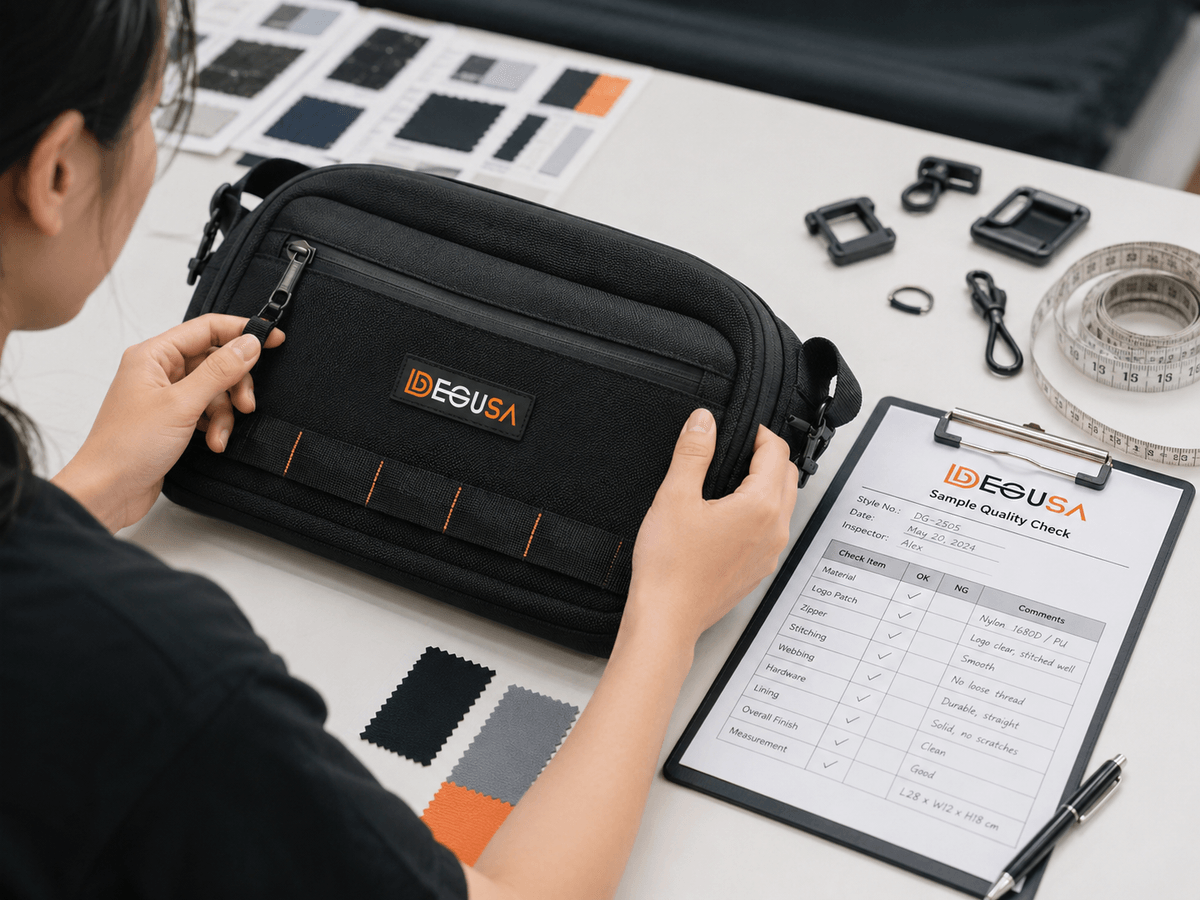
A custom bag is made from many details, including fabric, lining, padding, logo method, zipper, hardware, webbing, stitching, size, structure and packing. If these details are not checked during sampling, small problems may become bigger issues during bulk production.
This is why a reliable custom bag supplier usually does not suggest moving directly to bulk production before the sample is reviewed and approved.
Quick Answer: Why Does Custom Bag Sampling Take Time?
Custom bag sampling takes time because the supplier needs to confirm materials, structure, logo position, stitching, zipper function, hardware, size, workmanship and packing details before bulk production. A sample helps buyers and suppliers check whether the design is practical and whether the final product can match the buyer’s requirements.
For overseas buyers, sampling can reduce misunderstandings before materials are cut, logos are printed and mass production begins.
1. Sampling Helps Confirm Materials
Material selection is one of the first reasons why custom bag sampling takes time. Different bags require different materials. A cooler bag may need insulated lining, foam or PEVA. A pet travel bag may need breathable mesh and durable fabric. A sports bag or duffel bag may need stronger polyester, reinforced webbing and reliable zippers.
During sampling, the supplier needs to check whether the selected material is suitable for the bag’s function, structure, appearance and budget.
Material checking may include:
- Fabric type
- Color and texture
- Thickness or weight
- Lining material
- Padding or foam
- Mesh quality
- Waterproof or water-resistant treatment
- Webbing and binding material
If the material is not confirmed clearly during sampling, the bulk goods may look different from what the buyer expected. This is why material confirmation should happen before bulk production starts.
2. Sampling Checks Whether the Structure Works
A bag may look simple in a drawing, but the real structure needs to be checked through a physical sample. The sample helps confirm whether the bag shape, pocket position, opening size, handle length, strap design and inner structure are practical.
For example, a pocket may look good on a design file, but it may be too small for actual use. A zipper opening may look correct in a sketch, but it may not open smoothly when the bag is sewn. A shoulder strap may need to be adjusted after the sample is tested.
This is especially important for functional bags, such as backpacks, sports bags, cooler bags, pet travel bags, racket bags and tool bags. These bags are not only for appearance. They also need to support real use.
3. Logo Details Need to Be Tested Before Bulk Production
Logo quality is one of the most visible parts of a custom bag. Sampling helps confirm the logo method, size, color, position and overall effect before mass production.
Common logo methods include silkscreen printing, embroidery, woven label, rubber patch, heat transfer, leather patch, metal logo and custom zipper puller logo. Each method works differently on different materials.
For example, printing on waterproof fabric may look different from printing on normal polyester. Embroidery may need a stronger backing. A rubber patch may need a mold and color confirmation. If a Pantone color is required, it should also be checked before bulk production.
Testing the logo during sampling helps avoid problems such as wrong color, unclear printing, poor alignment, wrong size or weak attachment.
4. Zippers, Hardware and Stitching Need Practical Checking
Custom bag sampling also takes time because zippers, buckles, pullers, sliders, hooks, D-rings, webbing and stitching all need to be checked in real form.
These details affect both appearance and function. A zipper should open and close smoothly. A buckle should be strong enough. A shoulder strap should be securely attached. Stitching should be neat, strong and properly reinforced at stress points.
During sample checking, buyers and suppliers may review:
- Zipper direction and smoothness
- Zipper puller shape and strength
- Buckle and hardware quality
- Webbing width and color
- Handle and strap connection
- Stitching strength
- Reinforcement at stress points
- Overall workmanship
If these details are not checked during sampling, problems may only appear after many pieces have already been produced.
5. Size and Fit Need to Be Confirmed
For many custom bags, size is not only about length, width and height. Buyers may also need to check pocket size, opening size, handle length, shoulder strap length, bottom width, gusset size and logo position.
Bags are soft products, so a small size tolerance may be normal. However, if the bag needs to hold a specific product, tool, bottle, racket, pet accessory or promotional item, size checking becomes more important.
A sample allows the buyer to check whether the bag can actually hold what it is designed for. This is much safer than discovering the problem after bulk production.
6. Packing Details Should Also Be Reviewed Early
Many buyers think sampling only checks the bag itself, but packing details should also be reviewed before bulk production when needed.
Packing may include individual polybags, hangtags, product labels, warning labels, carton quantity, carton marks, barcode labels and packing method. For export orders, packing affects warehouse receiving, shipment documents and customer delivery.
If packing requirements are not confirmed early, the supplier may need to adjust labels, carton marks or packing method later, which can delay shipment.
7. Why Sampling Cannot Always Be Finished Immediately
Custom bag sampling usually involves several steps. The supplier may need to source materials, prepare logo artwork, arrange printing or embroidery, cut fabric panels, sew the sample, check workmanship, take photos and make adjustments if needed.
Some details may take more time, such as custom-dyed fabric, molded rubber patches, special hardware, custom zipper pullers or special lining materials.
The sample timeline also depends on whether the buyer has provided complete information. A clear tech pack, size, reference photos, logo artwork, material requirement and packing instructions can help the supplier prepare the sample more efficiently.
8. What Buyers Can Prepare to Speed Up Sampling
Although sampling needs time, buyers can help make the process smoother by preparing clear project information at the beginning.
Before starting a sample, buyers can prepare:
- Bag type and target use
- Size and structure requirements
- Reference photos or design drawings
- Logo artwork
- Material preference
- Color reference or Pantone number
- Quantity estimate
- Packing requirements
- Special function requirements
- Target delivery schedule
For a clearer development process, buyers can review our sample development process before starting a custom bag project.
9. Sampling Helps Reduce Bulk Production Risk
A sample is not only a product preview. It is also a quality reference for bulk production. Once the sample is approved, it can be used to compare material, logo, structure, workmanship, size and packing details during production.
For overseas buyers who cannot visit the factory in person, the approved sample, sample comments, production photos and quality updates can help reduce uncertainty.
This is why working with a reliable custom bag manufacturer in China is important for overseas buyers.
FAQ
1. Why does custom bag sampling take several days?
Custom bag sampling takes several days because materials, structure, logo, zippers, hardware, stitching, size and packing details need to be prepared and checked before bulk production.
2. Can custom bags go directly to bulk production without sampling?
It is not recommended for most custom bag projects. Without sampling, buyers and suppliers may miss important details such as material difference, logo position, size tolerance, zipper function or packing requirements.
3. What information should buyers provide before sampling?
Buyers should provide bag type, size, reference photos, logo artwork, material preference, color requirement, estimated quantity, packing details and target delivery schedule.
4. Does sample approval help with quality control?
Yes. An approved sample gives both the buyer and supplier a clear reference for bulk production. It helps confirm material, structure, logo, stitching, zipper, hardware, size and workmanship.
Conclusion
Custom bag sampling takes time because it is used to confirm many important details before bulk production. It helps check materials, structure, logo, stitching, zippers, hardware, size, workmanship and packing requirements.
For overseas buyers, sampling is not a delay. It is a practical step to reduce mistakes, improve communication and make bulk production more reliable.
If you are still comparing suppliers, you can also read our guide on How to Choose a Custom Bag Manufacturer in China to understand what buyers should check before placing an order.
Author Note
This article was prepared by Angel from Degusa Bags Team, based on our daily work in custom bag development, sample follow-up, material checking, logo confirmation, production coordination and export communication for overseas buyers.
Degusa Bags supports OEM and ODM custom bag projects, including backpacks, cooler bags, sports bags, duffel bags, pet travel bags, racket bags, cosmetic bags and other functional sewn products.